
Interior Design Project Management: The Complete Workflow Guide (2026)
Interior design is creative work delivered through industrial execution. The studios that grow profitably are not the most creative — they are the ones who manage projects like a manufacturing line: clear stages, defined handoffs, measurable timelines.
This is the complete 2026 workflow guide for managing an interior project from lead to handover.
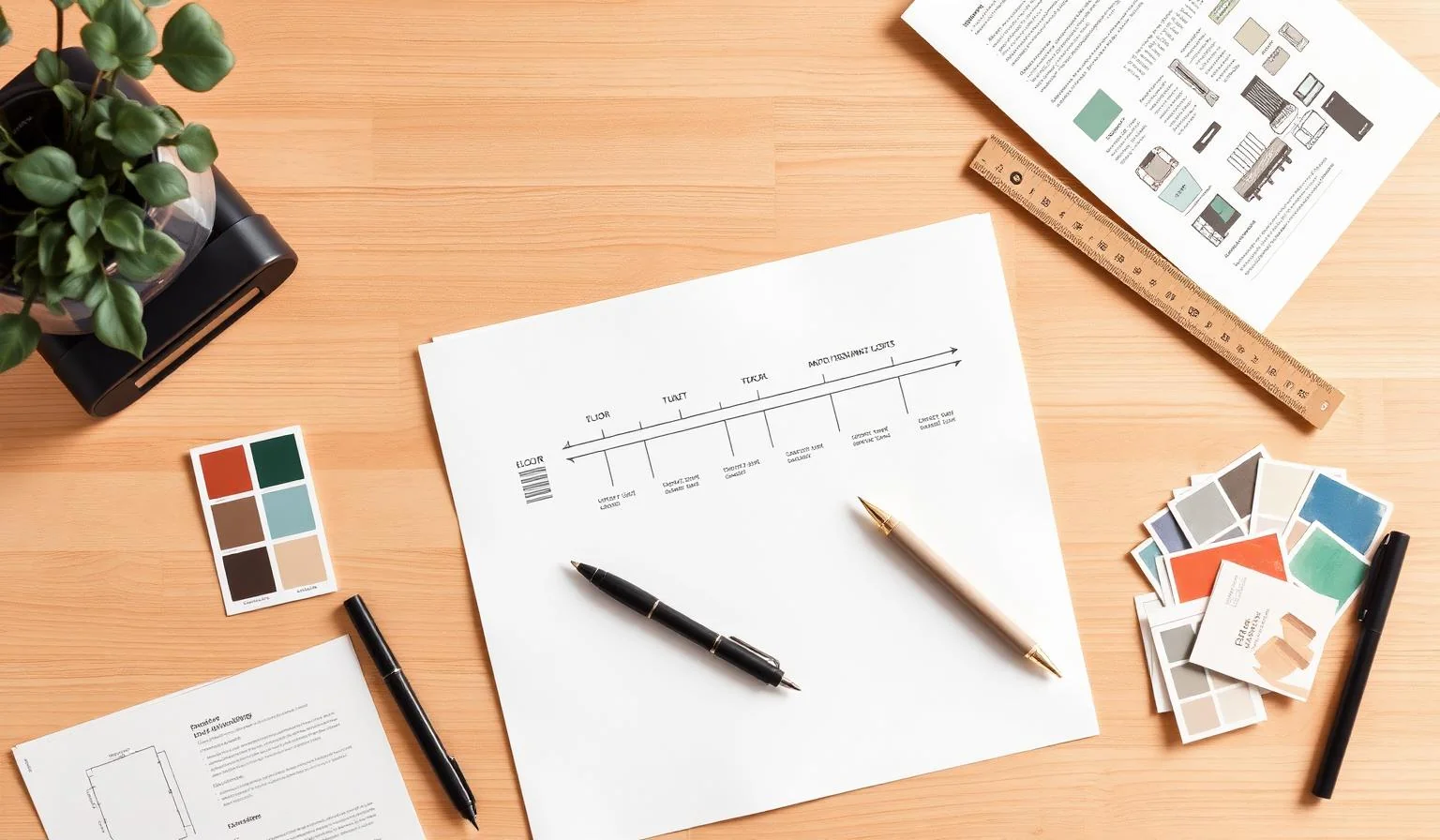
The 7 stages of a real interior project
- Lead and qualification
- Site visit and measurement
- Design and presentation
- Quotation and approval
- Procurement and production
- Execution at site
- Handover and warranty
We will go through each in detail.
Stage 1 — Lead and qualification
Not every enquiry is a project. Qualify on three vectors:
- Budget fit. Have a "minimum project value" filter. Anything below wastes design hours.
- Decision-maker access. If the calling person is not the decision-maker, schedule a meeting with the actual decision-maker before investing time.
- Timeline alignment. Are they ready in 30 days or 6 months? Pipeline accordingly.
Maintain a lead status: New → Qualified → Discovery → Lost / Won.
Stage 2 — Site visit and measurement
- Always go physically. Measurements off a floor plan are wrong 30% of the time.
- Bring a checklist (light points, plumbing, beam locations, slab heights, false ceiling height available).
- Photograph every wall, every existing fixture.
- Capture client lifestyle, not just dimensions — number of saris, cooking style, work-from-home setup.
The site measurement guide covers this stage in depth.
Stage 3 — Design and presentation
- 2D layouts first; 3D after layout sign-off.
- Show 3 concept directions, not 10. Choice fatigue kills decisions.
- Present materials as physical samples in the second meeting, not in the first email.
Lock the design with a signed mood board before quotation. Re-designing after quotation is the single biggest source of margin loss.
Stage 4 — Quotation and approval
- Issue a proper interior design quotation with itemised BOQ, tax, milestones.
- Validity: 15–30 days.
- Convert to project on advance payment.
Stage 5 — Procurement and production
- Generate a purchase plan with lead times.
- Place orders in dependency order (granite needs template → template needs carcass install → carcass needs site clearance).
- Track each PO: ordered → dispatched → received → installed.
- Maintain a vendor scorecard (on-time %, defect %, payment terms).
Stage 6 — Execution at site
- Run a daily site report (DSR): tasks planned, tasks done, blockers.
- Hold a weekly client review meeting — same day, same time. Predictability builds trust.
- Snag list is not optional. Start it from day 1, not at handover.
The team and vendor management guide covers this stage.
Stage 7 — Handover and warranty
- Site clean, full snag list closed.
- Handover document with: warranty letter, brand warranty cards, care instructions, AMC contact list.
- 30/60/90 day follow-up call. This is the easiest source of referrals.
The four numbers every interior PM tracks
- Quoted vs Actual margin per project.
- Days delayed vs original schedule.
- Snags at handover count.
- Client NPS (would they refer you?).
If you cannot answer these for your last project, you do not have project management — you have heroics.
Tools an interior studio actually needs
- Lead CRM — pipeline visibility.
- Quotation + invoice software — like Intorza.
- Project tracker — Gantt or Kanban.
- Site DSR app — for the site supervisor.
- Client communication channel — WhatsApp group per project works for most.
You do not need 10 tools. You need 3 that talk to each other.
Common project management failures
- No locked design. Continuous client changes erode margin.
- No daily site reporting. Surprises at handover.
- Cash flow run on intuition. Tracked in our payments and cash flow guide.
- Heroic project lead, no system. When that person leaves, the studio collapses.
What to do next
Pick your last project. Walk it through these 7 stages. Where did time leak? Where did margin leak? That is your first system to build.
Intorza unifies quotation, invoicing, and project tracking in one place — built for interior studios. Start free →